
Build vs Buy: The portal you consider free is actually your most expensive system
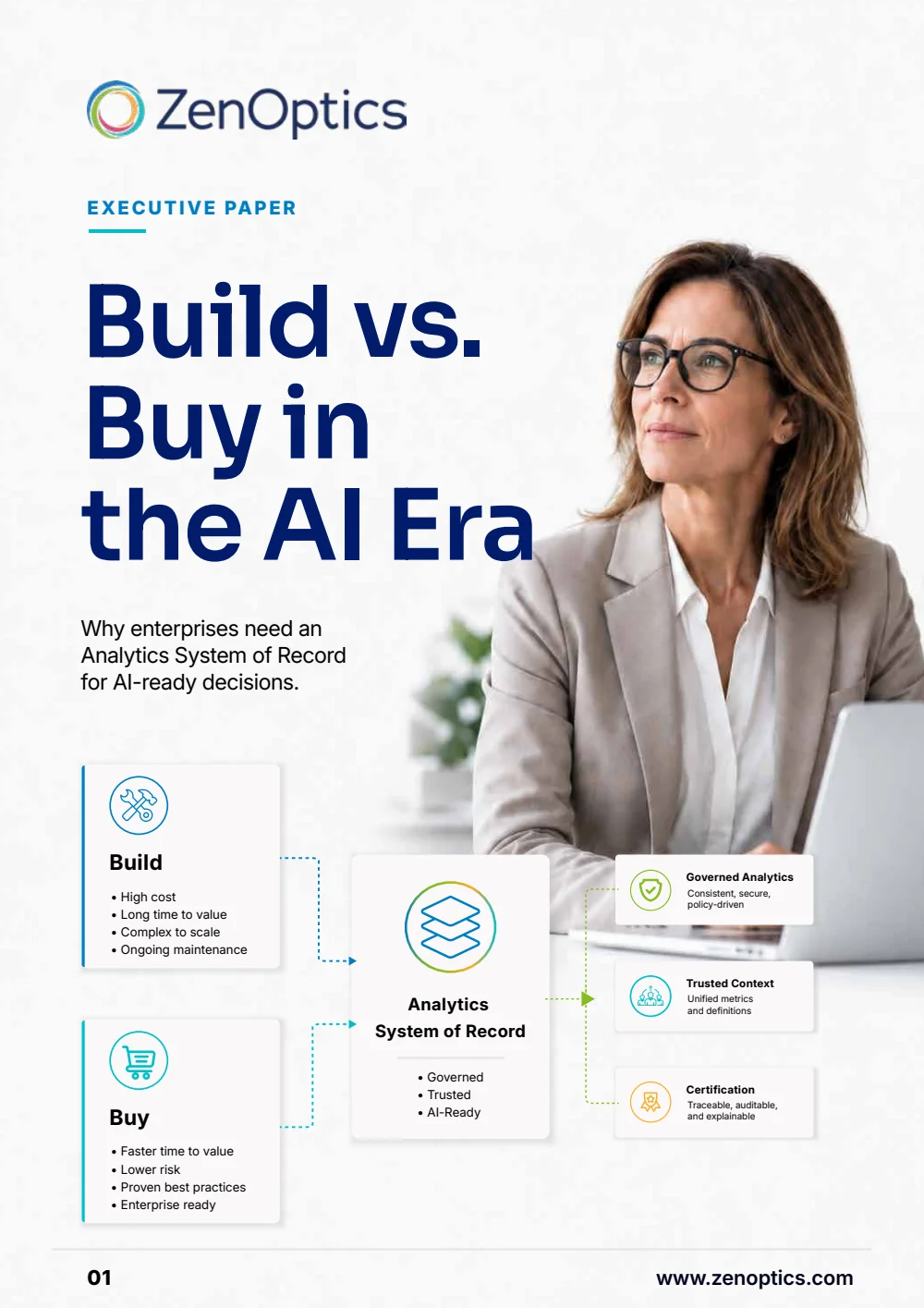
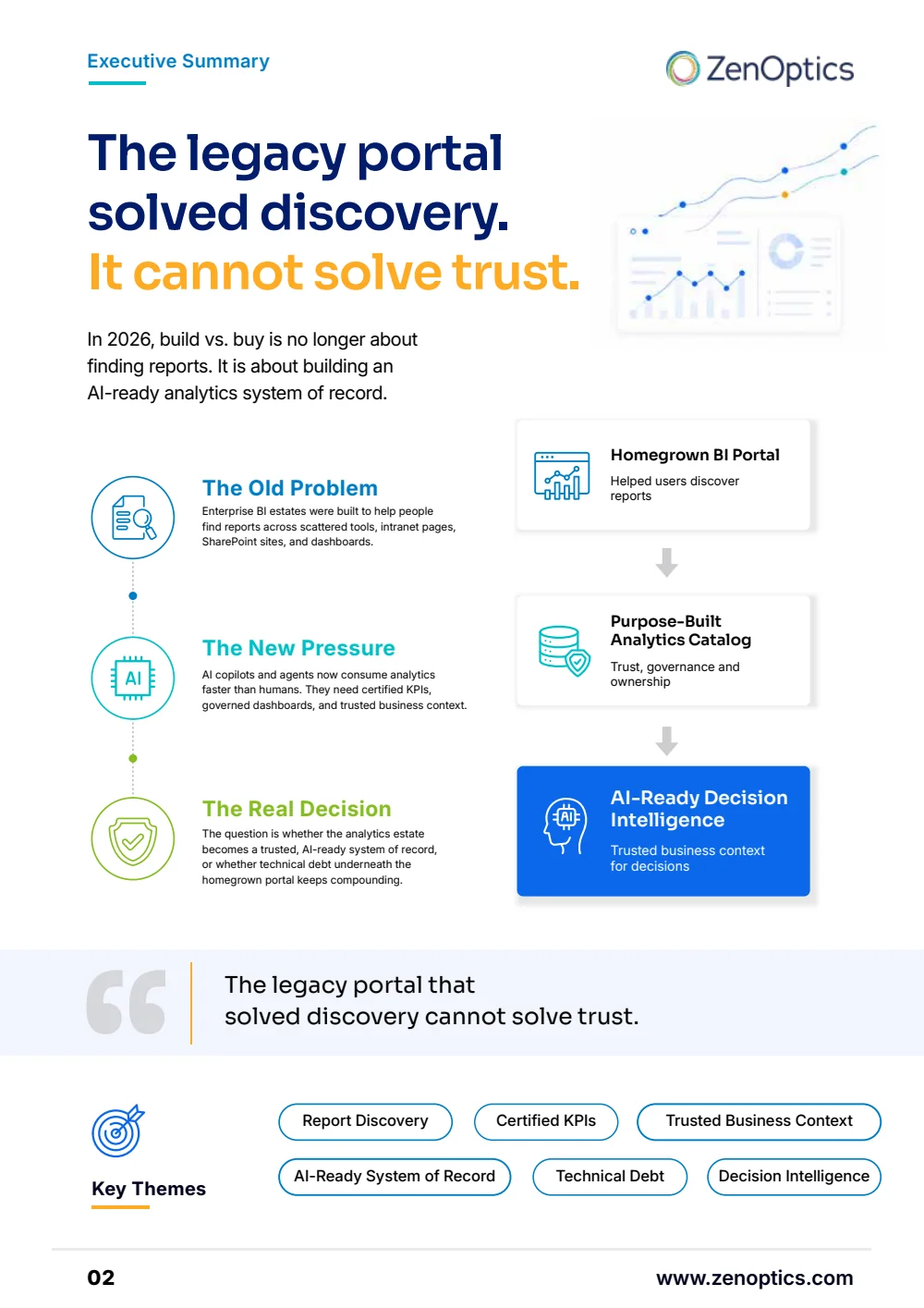
Your homegrown portal solved report discovery but lacked governance for KPIs and dashboard certification, which has led to annual compounding costs and inaccurate data for your copilots. This guide presents a build‑vs‑buy framework to address these issues.
Get the guide directly in your inbox; no sales call.
Unlock the full guide
Submit your email to read all chapters [+12 pages].
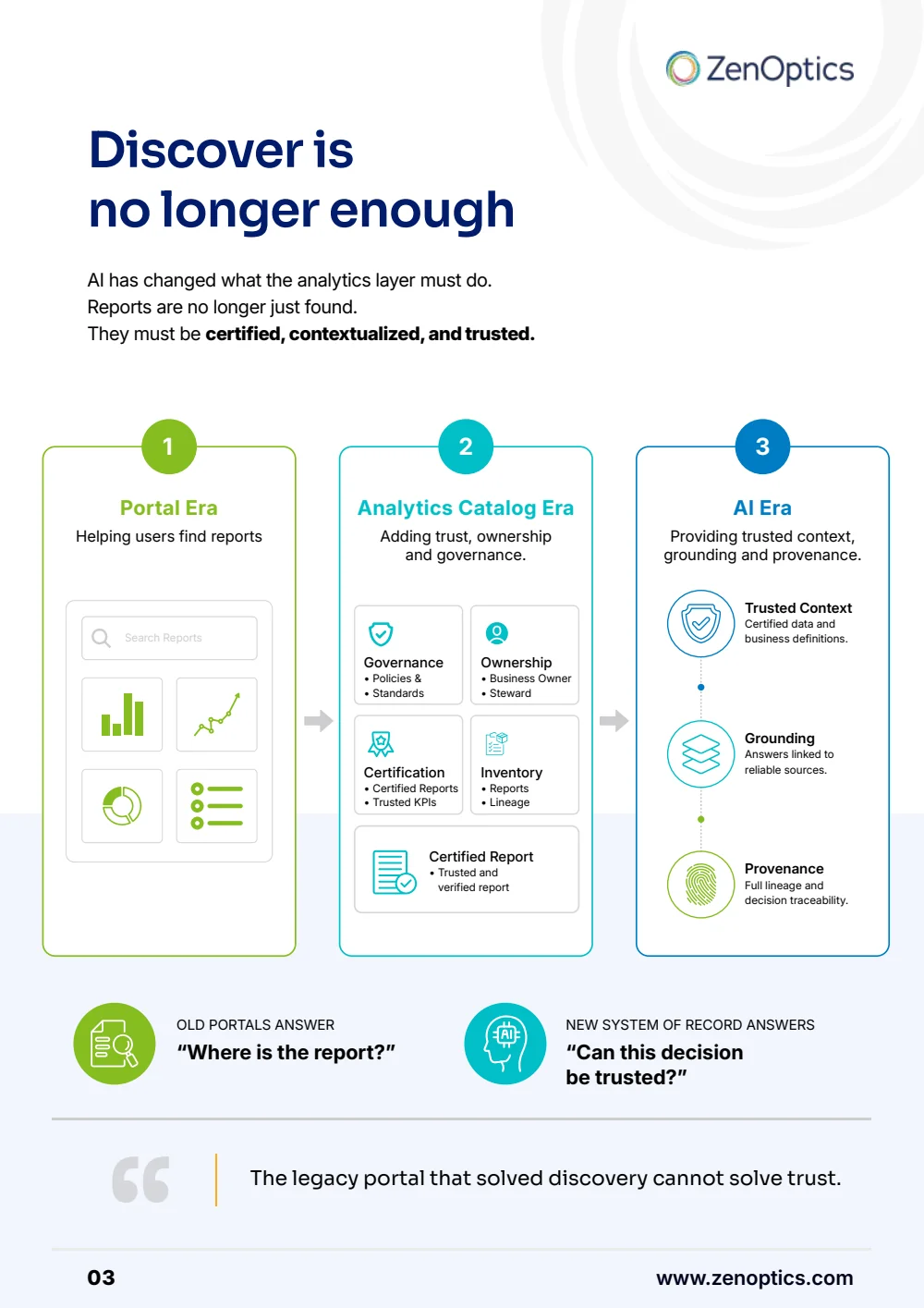
Your portal solved discovery. It was never built for governance or AI
KPI definitions that drift
Finance defines revenue one way, Operations another, Supply Chain a third. Every executive meeting turns into a debate over which dashboard to trust instead of what to do next.
An analytics estate AI can’t use
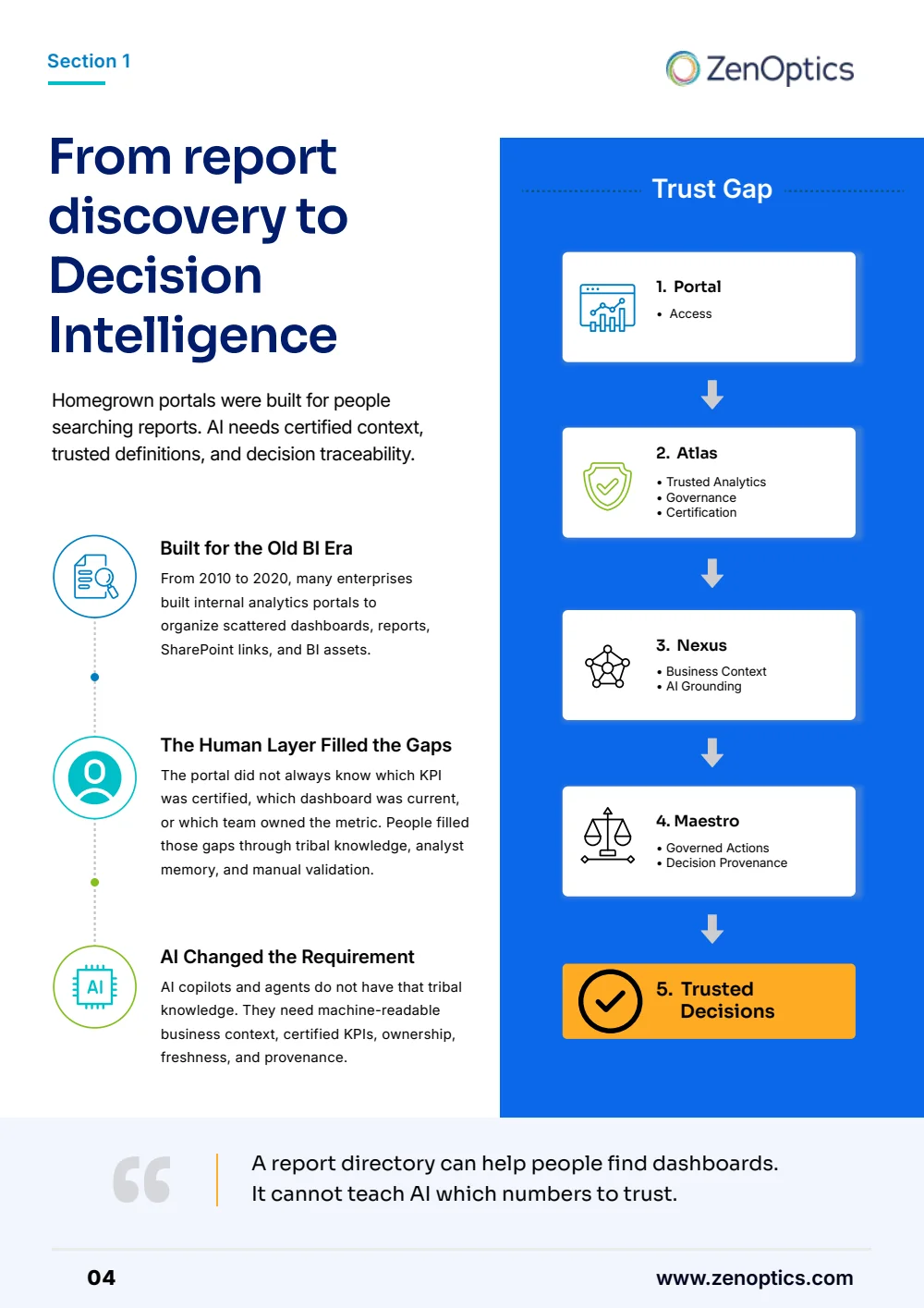
Copilots can’t ask a colleague which workspace holds the certified number; lacking a governed context layer. They rely on the first metric they deem reliable, which can be wrong at enterprise scale.

Most homegrown portals meet none of these criteria. Score your estate against the seven criteria in the guide and get your copy today.
Can your portal do this?
Assess your homegrown portal against the build-vs-buy criteria that matter now.
Govern every analytics asset across every BI tool, not just the ones it natively connects to.
One certified definition per KPI, owned by the business and standardized across functions.
A machine-readable context layer that AI can ground its answers in.
Decision provenance, every answer traces back to a KPI, an owner, and a policy.
A total cost of ownership that doesn’t compound year over year.
What the decision actually comes down to.
The hidden cost of a homegrown portal
Most teams treat the portal as a sunk cost: the build was budgeted and the license is paid. The guide quantifies what that view overlooks: four compounding failures, the FTEs required for manual upkeep, and an AI‑readiness gap that widens each quarter the portal remains in use.
The criteria that actually decide it
Decide whether your estate becomes the governed system of record that grounds every AI decision, or remains a directory of links AI can’t use. The guide outlines seven criteria that distinguish a true system of record from a portal masquerading as one, letting you evaluate any option on the table.
The real total cost of ownership
A side‑by‑side comparison of homegrown portal upkeep versus a governed system of record, cataloging, certification, AI readiness, onboarding each new BI tool, and decision traceability. The guide includes a calculation framework so you can run the numbers on your own estate and evaluate.
What changed at Fortune 500 scale
Illumina, GAP Group, Bimbo Bakeries USA, and Brown-Forman moved from homegrown analytics environments to a governed system of record. The guide details what each rationalized, retired, & recovered, and the outcomes measured afterward.
Built for the people who own the analytics estate
Whether you manage the portal or own the strategy, here is what you will take away.
VP of BI / Analytics
Reduce portal maintenance and reclaim BI capacity.
Chief Data & AI Officer
Build the AI-readiness case for the executive team.
IT / Platform Engineering
Evaluate the migration path and connector architecture.
Why enterprises are migrating at scale
More from ZenOptics
Brown-Forman: From SharePoint to Atlas
How a Fortune 500 spirits company replaced their legacy portal with a governed analytics system of record.
Read the case study →Janney: Unified BI Governance
How a financial services firm standardized KPI definitions across 5 BI platforms with Atlas.
Read the case study →Atlas: The Governed Analytics System of Record
Everything your homegrown portal cannot do, Atlas does by default.
Explore Atlas →The Portal Migration Playbook
Step-by-step guide to migrating from SharePoint to a governed analytics catalog.
Read the guide →